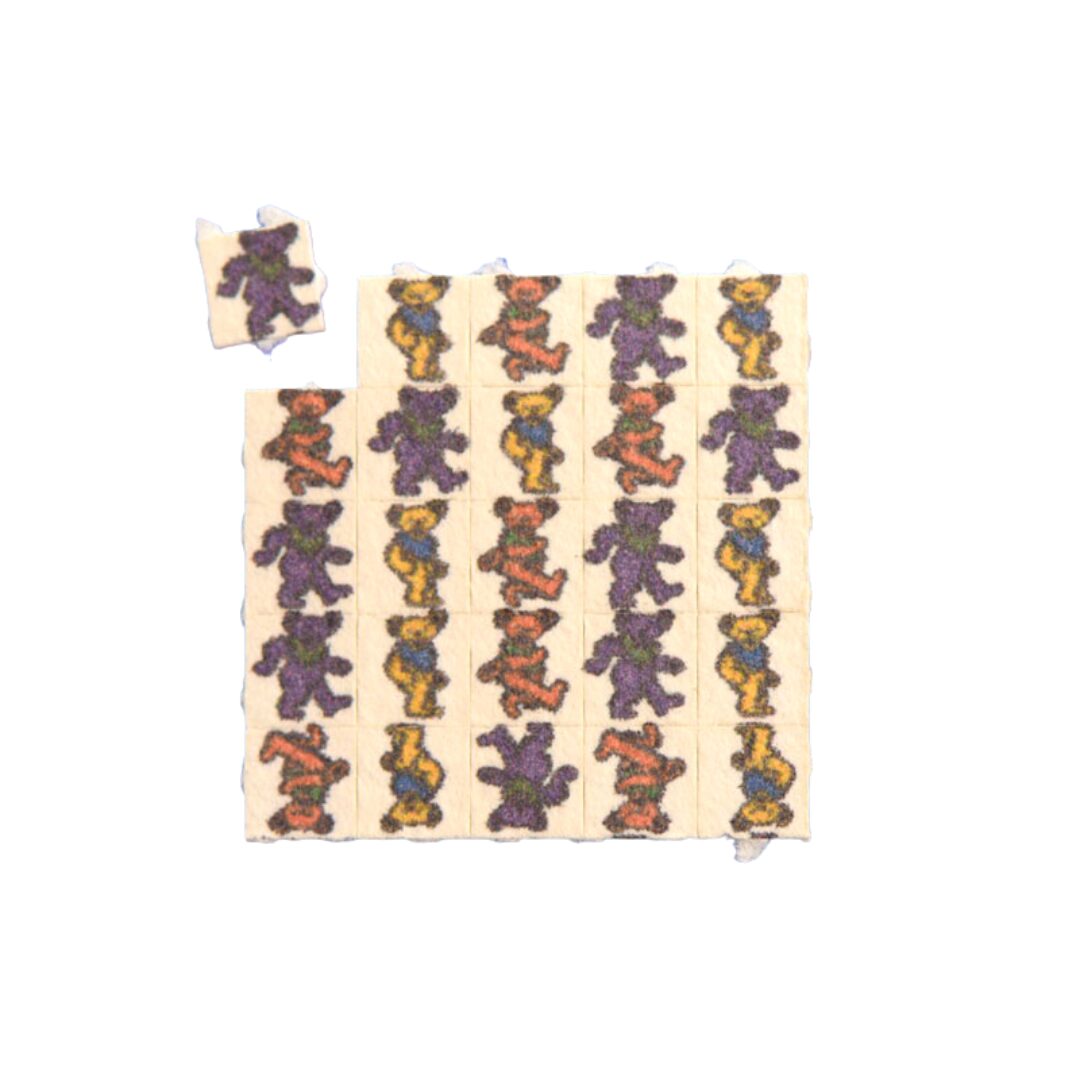
LSD-25 (120µg)
is the research code name for lysergic acid diethylamide, a potent synthetic psychedelic drug and hallucinogen belonging to the lysergamide class. Discovered in 1938 by Swiss chemist Albert Hofmann and first experienced in 1943, it is approximately 10,000 times more potent than mescaline by weight.

While primarily known as a psychoactive substance, the name “LSD-25” is also used for a popular indica-dominant marijuana strain characterized by euphoric and psychedelic effects, high THC levels (up to 27%), and purple buds with citric or diesel flavors.
Key Facts about LSD-25
-
Chemical Identity: Systematically known as d-lysergic acid diethylamide with the formula $C_{20}H_{25}N_{3}O$; it acts as a serotonin receptor agonist.
-
Psychoactive Effects: Users report visual hallucinations, time distortion, euphoria, and ego loss, with effects lasting 8–12 hours orally.
-
Medical History: It was distributed by Sandoz as Delysid for psychotherapy and “model psychosis” studies in the 1950s and 60s before being classified as Schedule I in the US.
-
Legal Status: Currently illegal in most countries (including the US, UK, and Australia) for recreational use, though research into its potential for treating anxiety, addiction, and cluster headaches is resurging.
-
Strain Profile: The cannabis variety is an autoflowering hybrid (often 70% Indica) used for insomnia, chronic pain, and appetite stimulation, with flowering times of 8–9 weeks.

